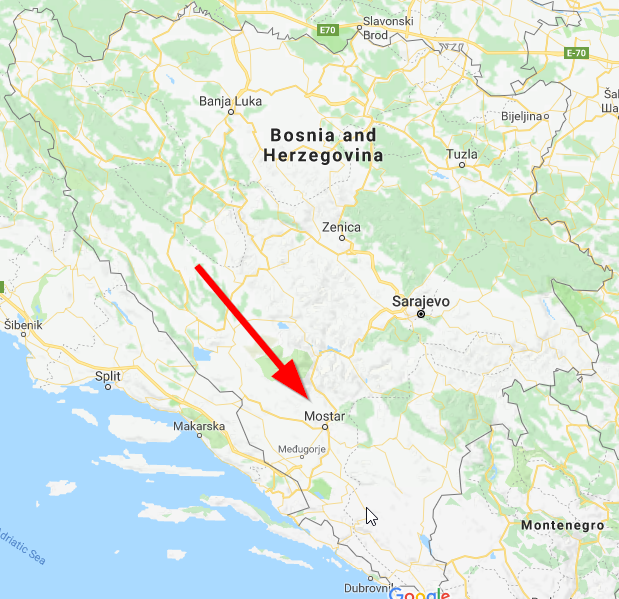
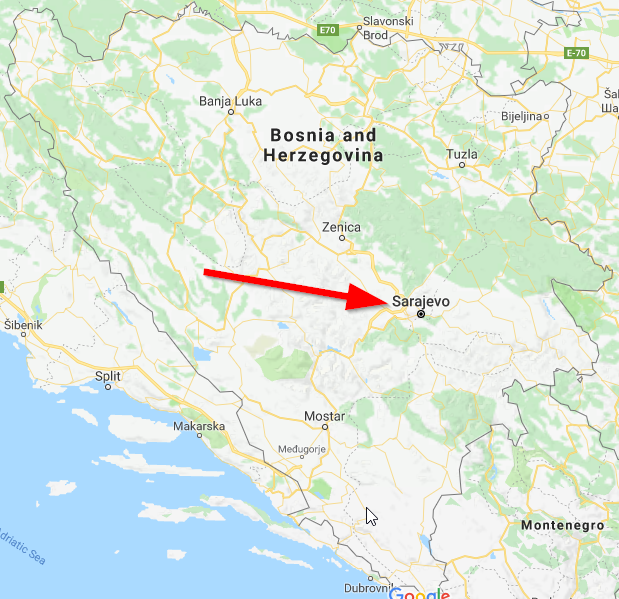
With Croatia being a minor disappointment, even though it was very pretty, we didn’t know what to expect from Bosnia & Herzegovina (two regions within one country – a little confusing but that’s its official name). If you’re not great with geography, here’s where it lies.
Anyway, I (Scott) have always been super interested in this part of the world. It’s a place where Orthadox Christianity, Catholicism, and Islam are crammed together. To make matters more complicated, each religious group claims its own ethnic group – even though they are all Slavic people.
Serbs are Orthodox
Croats are Catholic
Bosniaks are Muslims
Got all that? It’s all very confusing and lends itself to why so few people understand the complicated history here. Anyway, even with all the historical ethnic tension, Bosnia was still a highlight in our adventure.
Transportation
First of all, if you’re in the Balkans you’re either driving or taking a bus everywhere. Trains haven’t made it here yet, unfortunately. That’s a big bummer because riding buses, frankly, suck. Our first one – from Dubrovnik, Croatia to Mostar, Bosnia – went through four passport control booths. The reason for this is because Bosnia has a panhandle that reaches to the ocean, cutting Croatia into two sections.
This makes for all kinds of goofy transportation issues. If you’ve never traveled internationally by bus let me break it down for you. First, you’re super confused about which bus to get on, or if they charge extra for luggage (in Euros or local currency), and if they take boarding passes on your phone or if they have to be printed out. You never really know this ahead of time – which could make it exciting for some, I guess.
Anyway, you get on the bus and the assistant takes your ticket. Once you get to the border, either a passport control agent gets on the bus and looks at your passport – or (and this was terrifying the first time it happened) everyone hands their passports to the assistant and he runs them out to a control shack.
After 10-30 minutes you’re on your way, hopefully with a new visa stamp. I’m going to write a whole post on bus travel but this is a good primer.
Mostar
Okay, so after being hot, hungry, and tired, we finally made our way from the bus station to our airbnb – after getting lost for a little while. The joys of traveling!
Mostar is a small city with a charming old town and heaps of history. Mostar’s claim to tourism fame is a steep, beautiful bridge. Naturally, we had to have our picture with it.
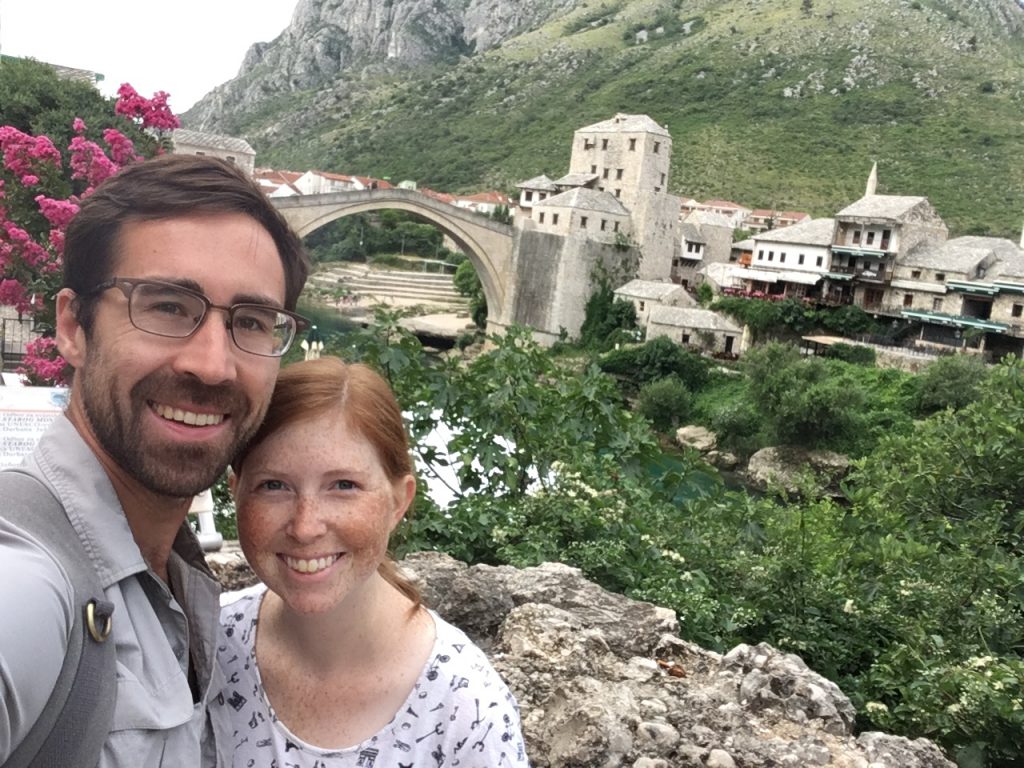
This particular bridge has a crazy bit of history. During Bosnia’s war of independence, the Croats destroyed it.
It’s obviously looking much better today. Folks even jump off it.
The Food!
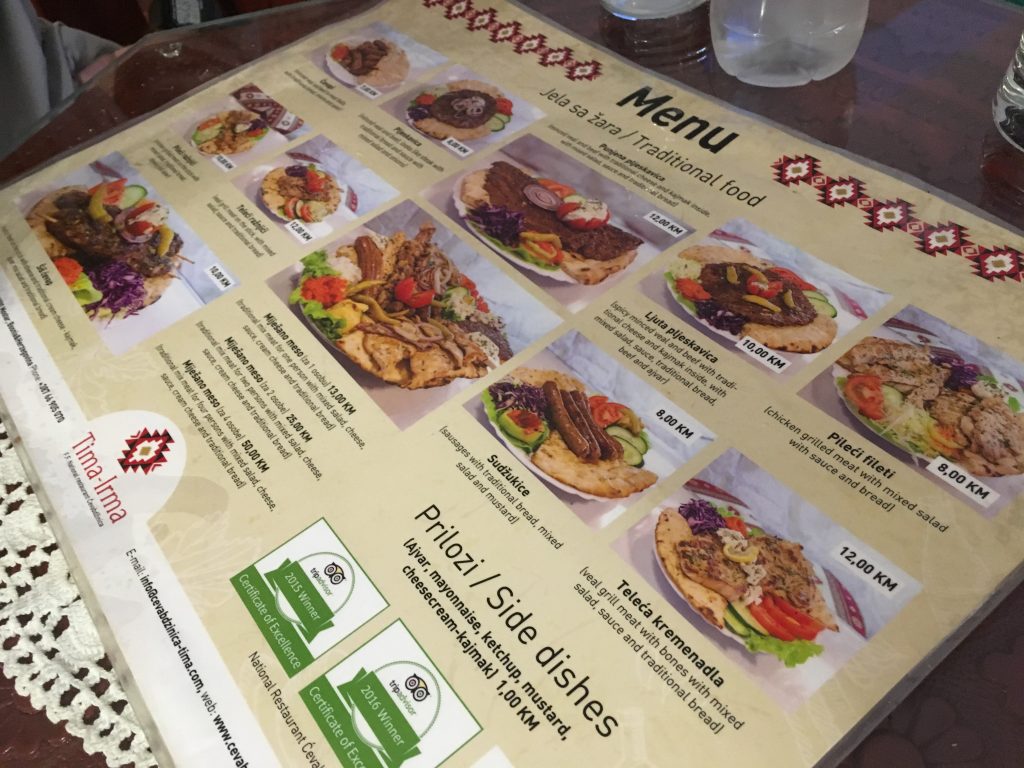
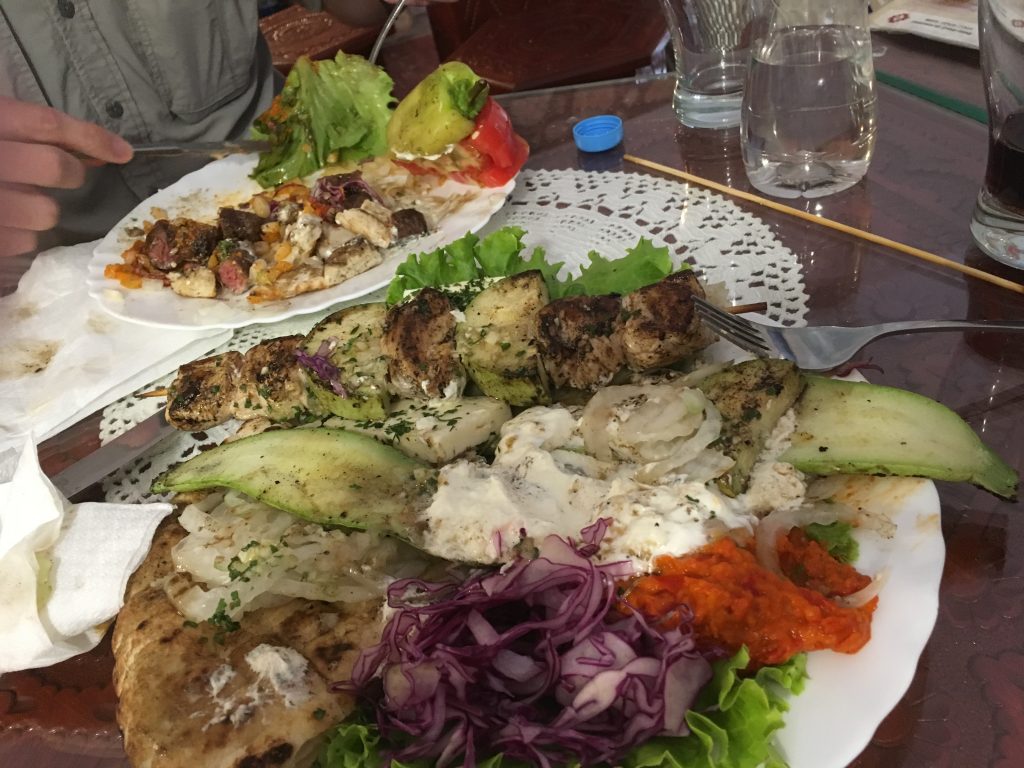
Typical Balkan food is de-lici-ous! Greek and Balkan food are my favorites. Dang it’s good! The food here is largely inspired by the Greeks and Turks, since the latter occupied the region for 400 years. Typical dishes have pita bread and grilled or kebab meat. Plenty of sauces and flavorful, grilled veggies make this food addictive.
The History
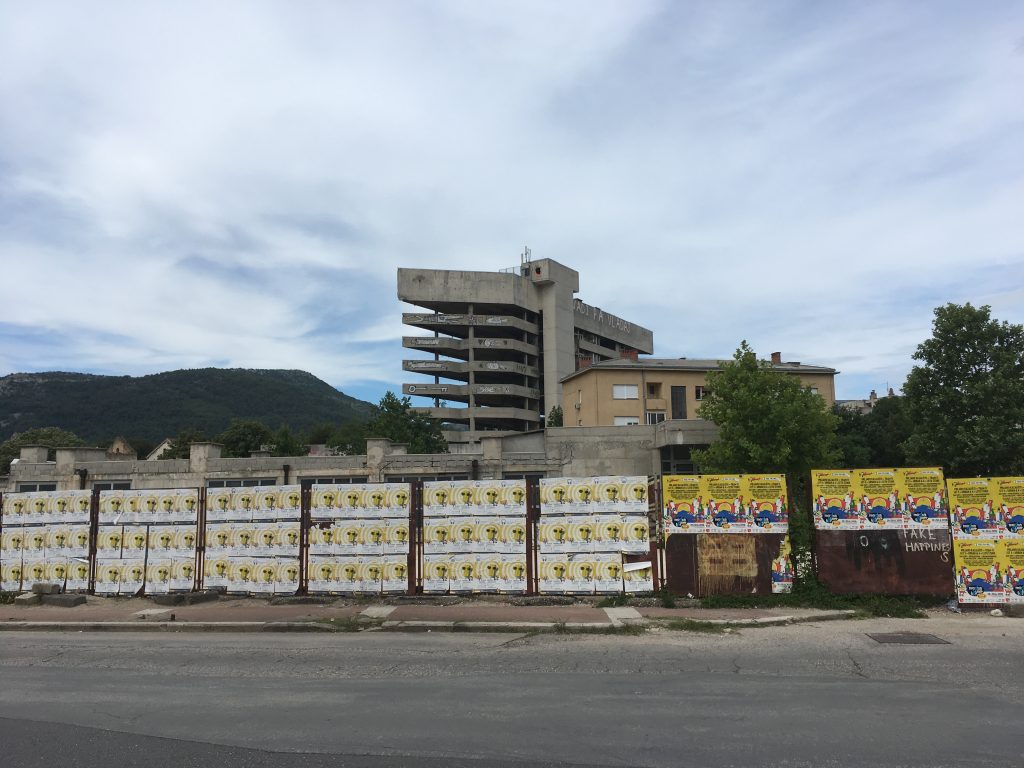
During the Bosnia war Mostar was hit very hard. Signs of the war are still on every street corner. For example, this is the Sniper Tower.
This was just a random building near the sniper tower.
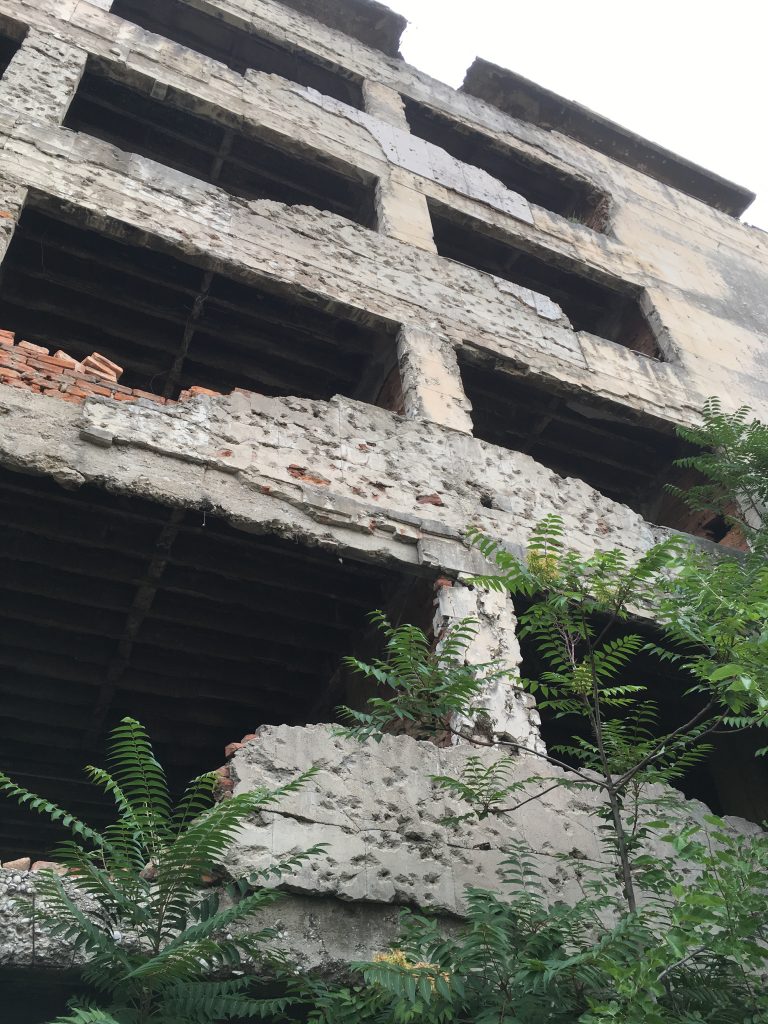
Those are all bullet holes. This building sits empty, waiting to be demolished. It was a stark reminder of how recently the ravages of war tore a European country apart.
Random Bobs and Bits
We ate at McDonalds and reenacted the famous Royale with Cheese scene from Pulp Fiction.
I thought we did pretty well…
Sarajevo
The History
When we were planning the European leg of our journey, visiting Sarajevo was an absolute must see. I am fascinated by the history here, especially resulting from the recent war. Sarajevo was ground zero for the Bosnian War in the 90s. For more than three and a half years, Serbian and Yugoslavian forces held the city in a deadly siege.
People lived underground and were in constant fear of snipers and mortars. The building we stayed in still showed the effects of warfare.
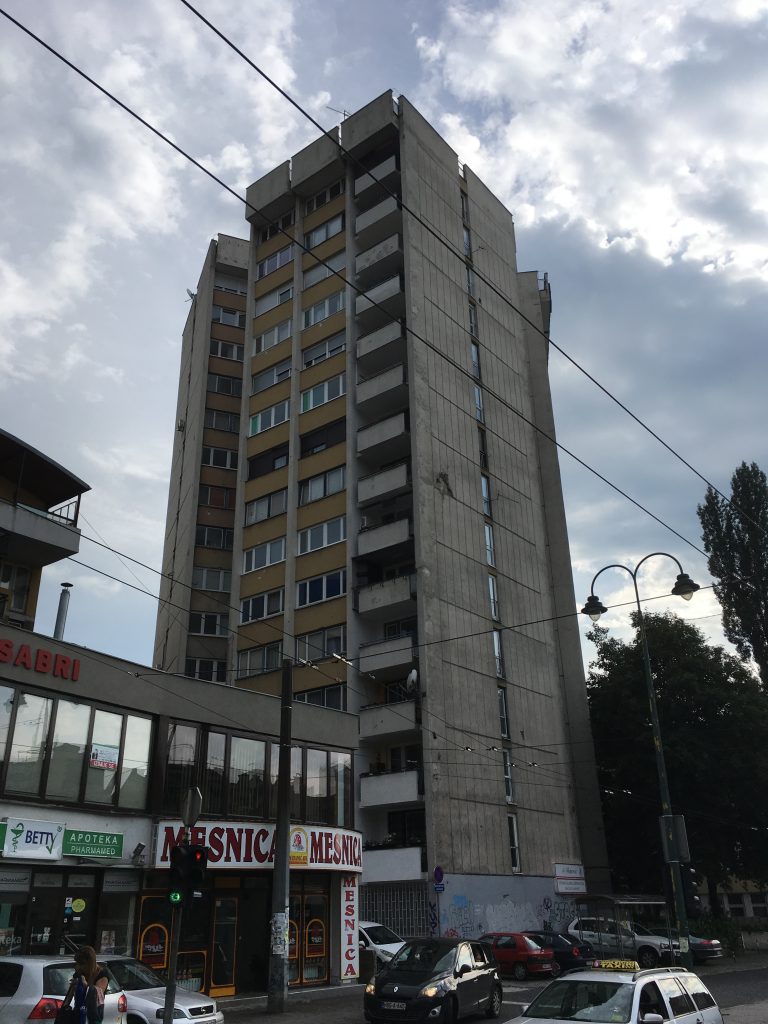
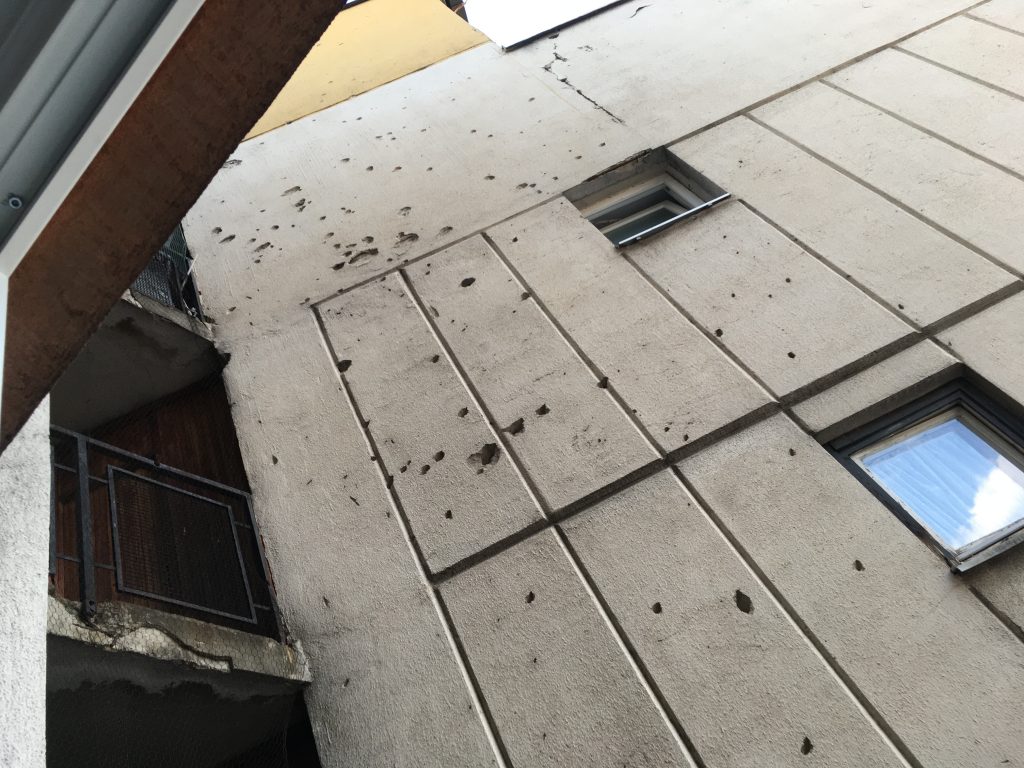
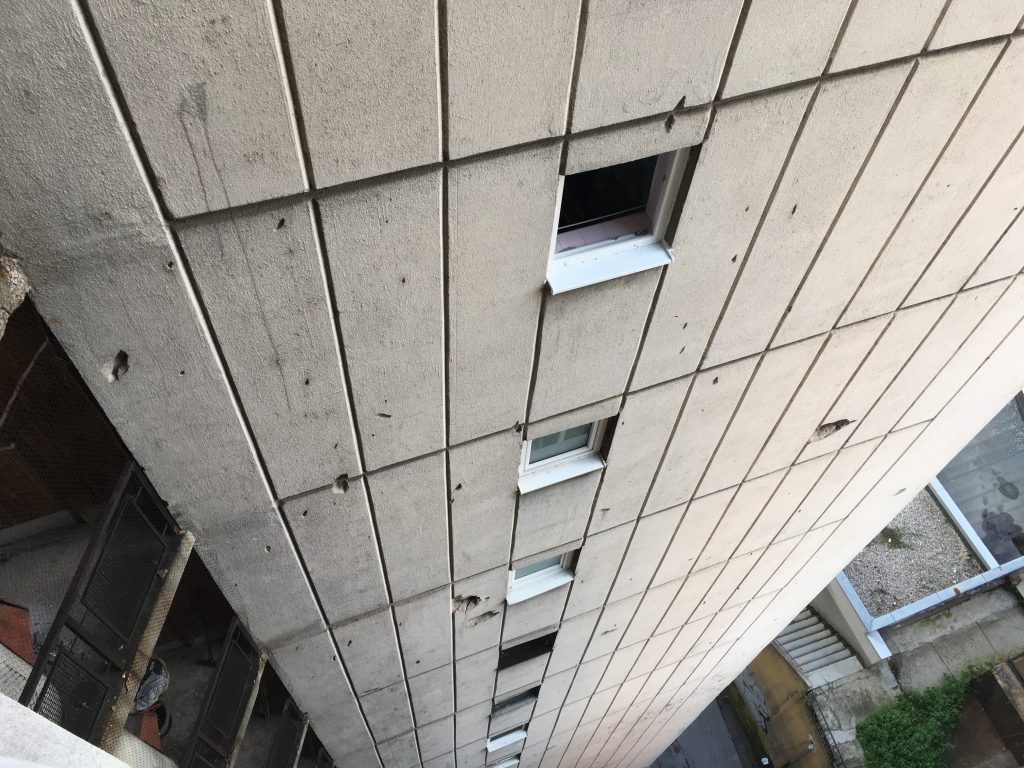
The effect is sobering. Many people are unwilling to talk about the atrocities that happened here in the 90s. Some of the war criminals, in fact, have already served their time in prison and are back on the streets, so it isn’t uncommon for civilians to encounter their torturers in daily life.
Tunnel of Hope
We booked a daylong tour guide to show us the history of the Sarajevo Siege through his eyes – he was a Bosnian soldier throughout the war. After driving through Sniper Alley, we made it to the Tunnel of Hope. This tunnel was hand dug under the airport and served as a lifeline of supplies to the besieged Bosniaks during the war.
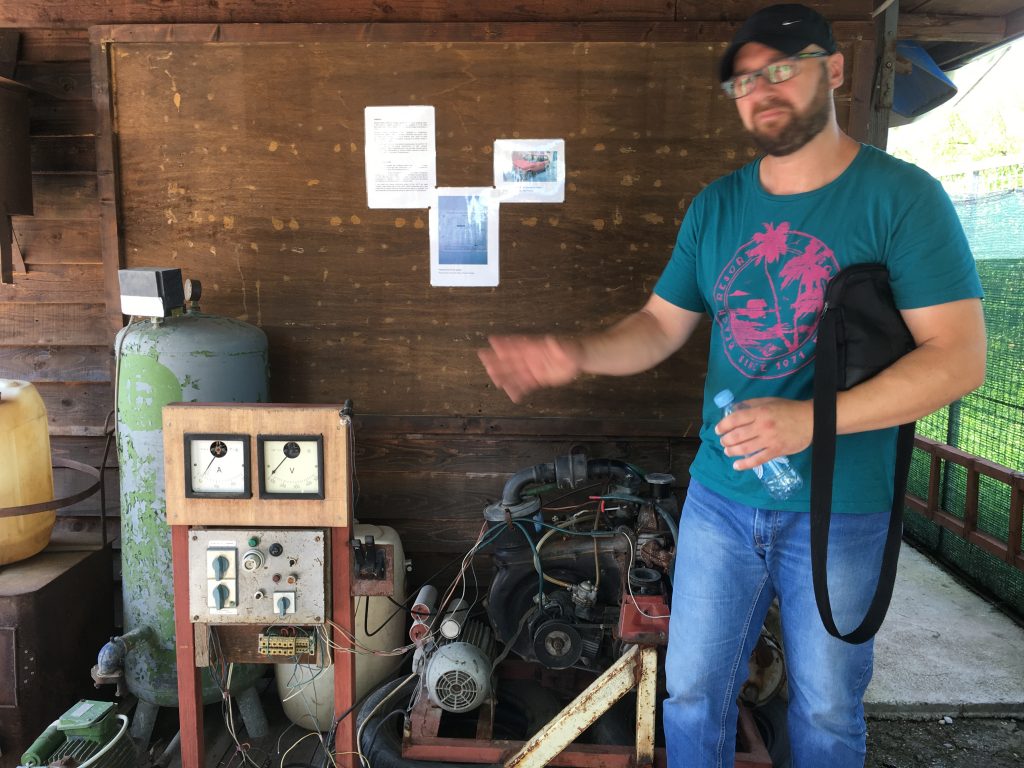
He told us horrifying stories of his sister being shot in the chest, his best friend (a Serb) abandoning him, and people he knew getting ripped apart by claymore mines. I felt bad for him, being that at age 18 a rifle was shoved in his hands and he had to fight to survive. He was happy to share his stories in an attempt to bring better understanding to the conflict.
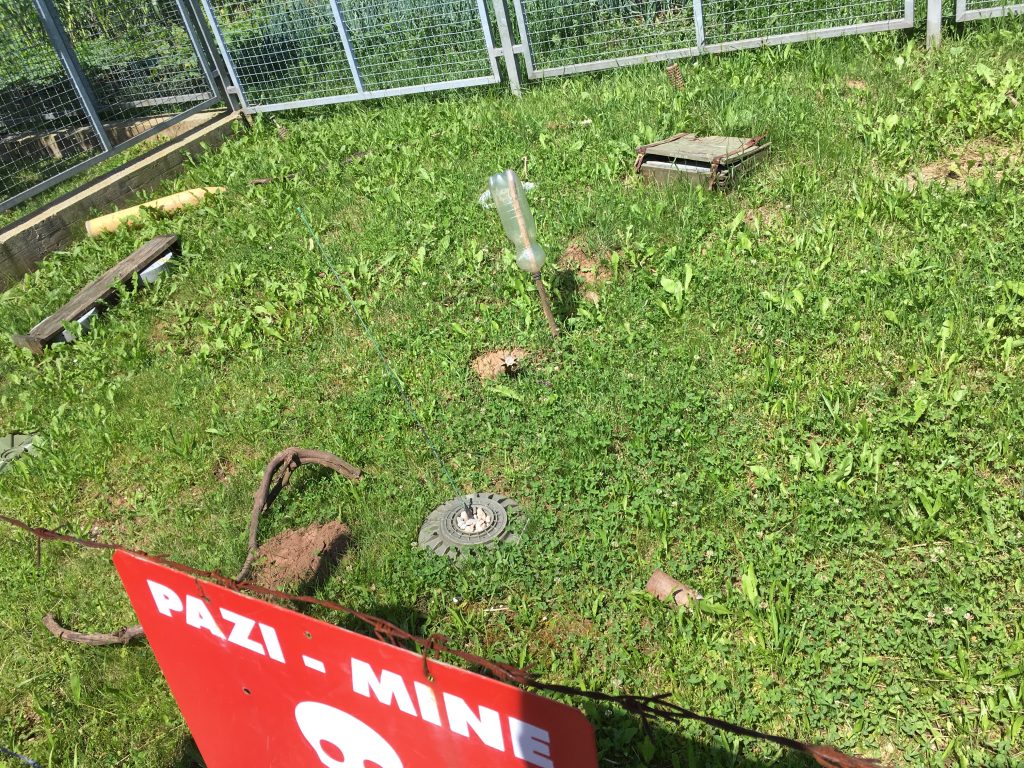
A large part of this tour focused on the 800-meter long tunnel which connected Sarajevo to the outside world. Crawling through it was surreal.
One other fact worth noting is on the outskirts of Sarajevo is a semi-independent region called Serbska. It’s a region of Serbs loyal, more or less, to Serbia. They even have a cemetery for the Russians who died supporting the Serbian siege on Sarajevo. It literally felt like driving into a different country when we got there. The ethnic tensions and divides between these people are still very strong.
With all of that history in mind, I asked a local what the current situation of Bosnia was. The local replied, “Unresolved”.
1984 Winter Olympics
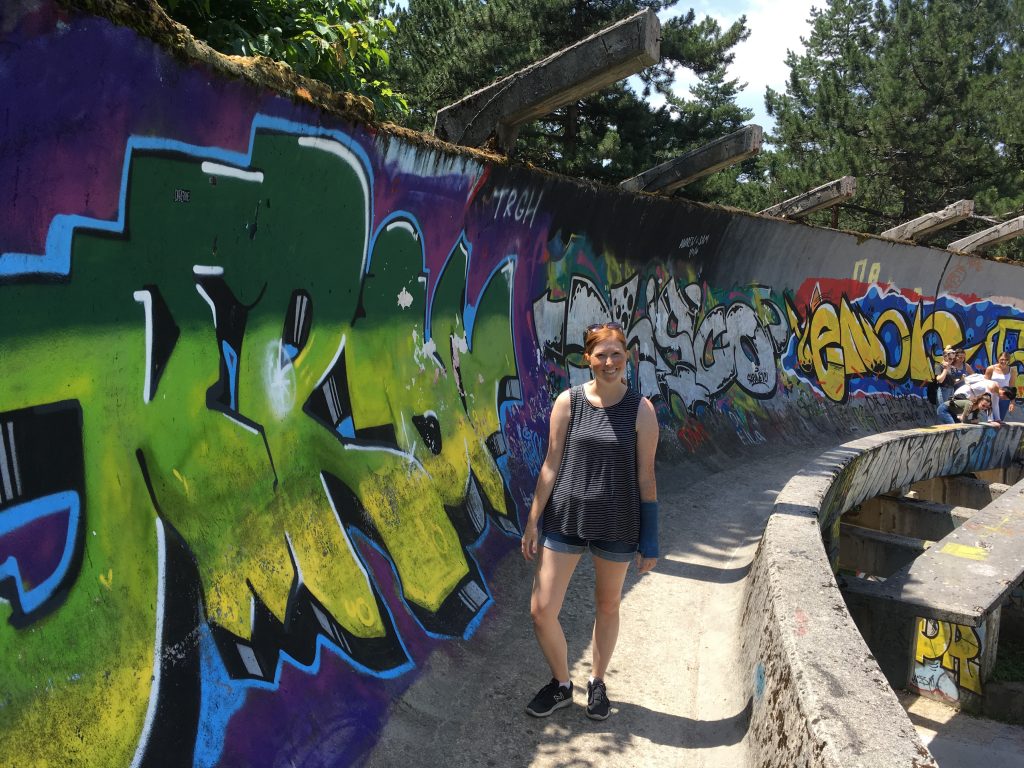
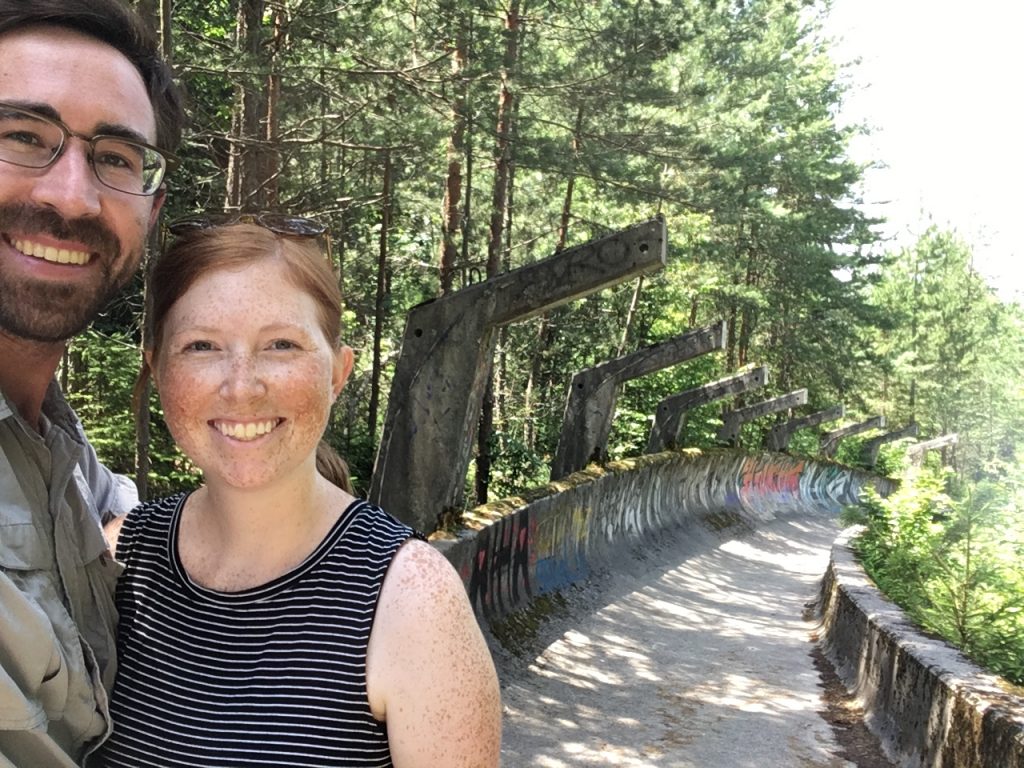
After touring through the Tunnel, we ended our history run with a little bit of the lighter side. We walked along the bobsled track Sarajevo built for the 1984 Winter Olympics.
The Start of World War 1
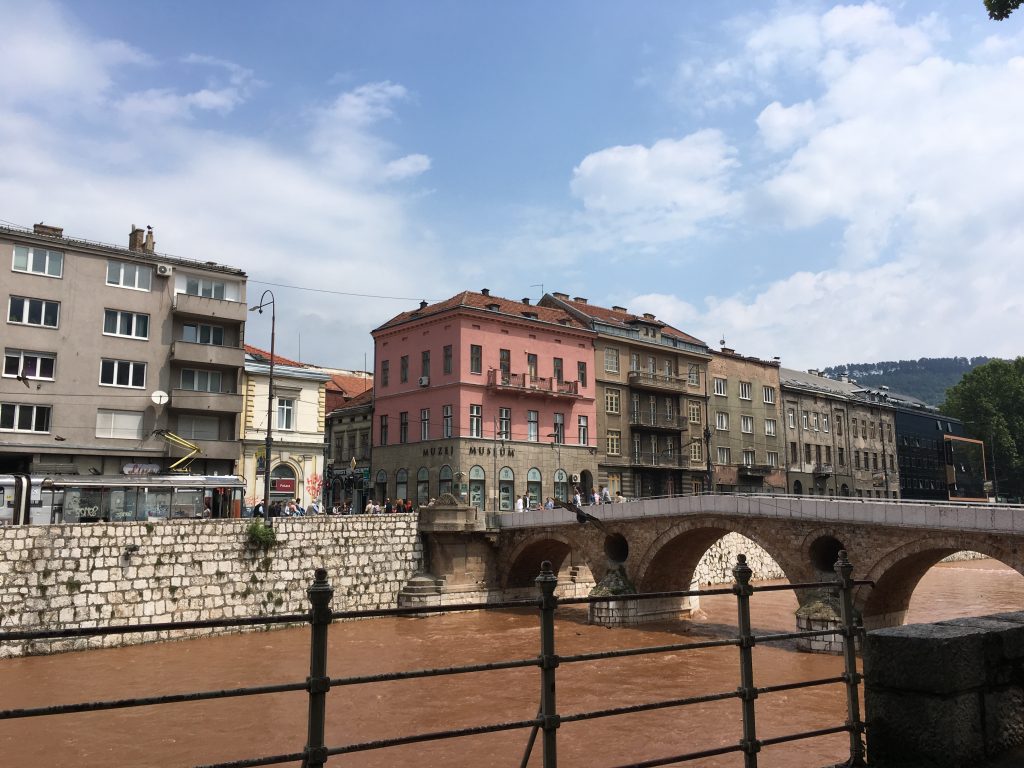
We’d be remiss if we didn’t comment on Sarajevo being the spot where Franz Ferdinand was assassinated. If you don’t remember your history, his assassination kicked off World War 1, which we all know lead to World War 2. The killing took place directly on the street corner near the bridge. What used to be a cafe is now a beautiful pink museum.
The Food
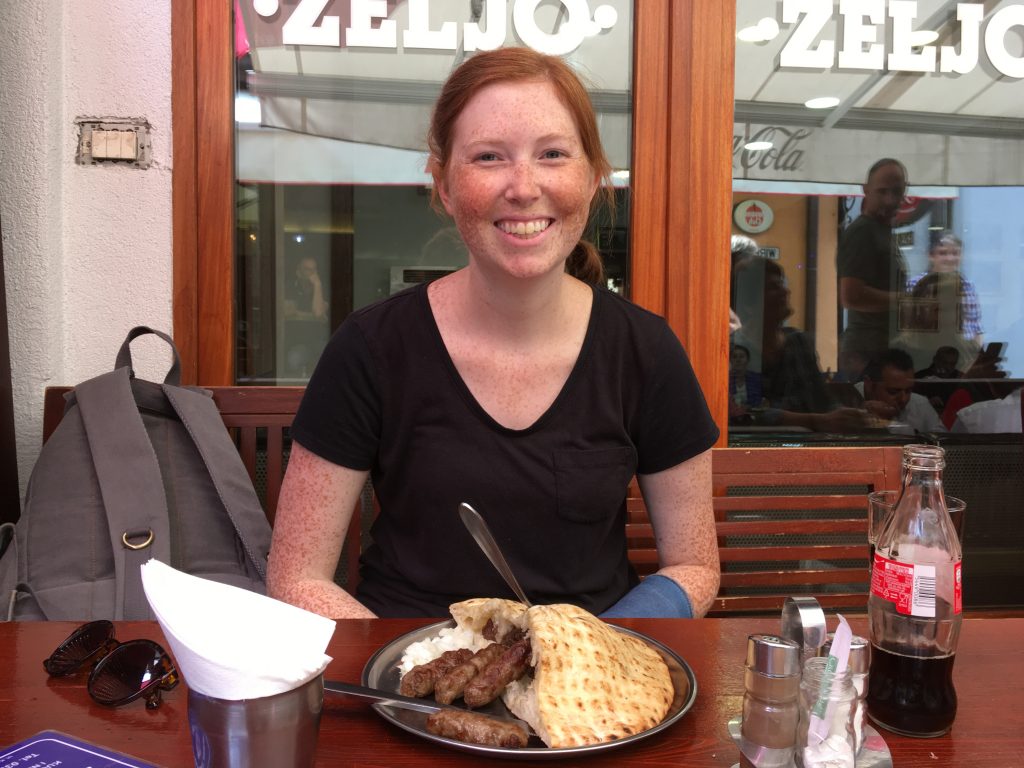
Much like Mostar, the food was simple but delicious. I need to find a Balkan restaurant when we get back home. At this restaurant below, our order came out in literally 2 minutes. This place only make one kind of food here, cevapcici, and they are very good at it.
Conclusion
While this location wasn’t a favorite of Hayley’s, I had a fantastic time. People were friendly, the food was good and cheap, and the history was enthralling. Plus where else can you walk on an Olympic bobsled track?
So with all that in mind, and averaging out our opinions, we give Bosnia & Herzegovina…

and a…

Probably closer to a 4 than a 3 once you average it all out.
Have you been to B&H? What did you think? Did you like it? Did you hate it? What did we miss? Let us know in the comments below.


Great history and cultural overviews! Thanks for sharing; I learned a lot!
Wow! Very interesting! Thanks.